A childhood shaped by faith, work, and family duty
I see Emilia Kaczorowska as one of those historical figures whose life is easy to miss at first glance, then impossible to ignore once the family story opens up. She was born on 26 March 1884 in Kraków, a city that held her early years like a stone cradle. She came from a large Catholic household and grew up in a world shaped by labor, prayer, and responsibility. Her life was not built around public applause. It was built around home, discipline, and care.
Her parents were Feliks Paweł Kaczorowski and Maria Anna Scholz, also recorded as Anna Maria Scholz. Feliks worked as a saddler and carriage repairer, and his trade placed the family inside the rhythm of practical work. He was not a man of ceremony. He was a craftsman, the kind who shaped usefulness with his hands. Emilia’s mother anchored the household and gave the family its emotional center. Together, they raised a large group of children, and Emilia grew up in the middle of that living circle.
The Kaczorowski family circle
Emilia was one child among nine, and that number matters. A large family changes the shape of childhood. It teaches patience early. It teaches sharing before comfort. It turns the home into a small republic of voices, duties, and alliances.
| Family member | Relationship to Emilia | Notes |
|---|---|---|
| Feliks Paweł Kaczorowski | Father | Saddler and carriage repairer |
| Maria Anna Scholz / Anna Maria Scholz | Mother | Matriarch of the household |
| Helena Augustyna Kaczorowska | Sister | Married Józef Kuczmierczyk |
| Olga Marianna Kaczorowska | Sister | Listed among the siblings |
| Maria Anna Kaczorowska | Sister | Married Leon Wiadrowski |
| Feliks Rudolf Kaczorowski | Brother | Listed among the siblings |
| Wiktoria Stanisława Kaczorowska | Sister | Listed among the siblings |
| Robert Kaczorowski | Brother | Later associated with the family saddlery business |
| Rudolfina Kaczorowska | Sister | Listed among the siblings |
| Anna Joanna Kaczorowska | Sister | Listed among the siblings |
Each sibling adds a thread to the larger family fabric. Helena Augustyna stands out because she married Józef Kuczmierczyk, which shows that the Kaczorowski family extended outward into other family lines. Maria Anna also married, becoming the wife of Leon Wiadrowski. Robert is especially notable because he remained tied to the family craft and later ran the saddlery business in Kraków. The others, including Olga Marianna, Feliks Rudolf, Wiktoria Stanisława, Rudolfina, and Anna Joanna, help complete the picture of a broad and interwoven family network. Emilia did not come from isolation. She came from a living web.
Education, marriage, and the start of a new household
Early Emilia’s education was pious and regimented, with Sisters of Divine Love involvement. That detail helps explain her latter life’s tone. Her world wasn’t casual. Structure, passion, and service formed it.
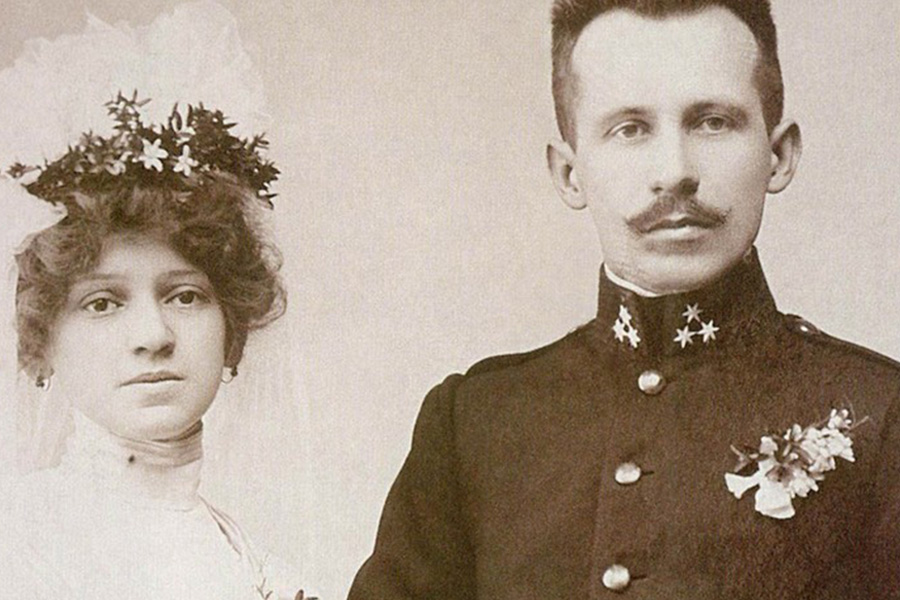
On February 10, 1906, Emilia married Karol Wojtyła Sr. in Kraków. The couple formed one of the most profound Catholic households in modern history. After serving in the military and administrative service, Karol Wojtyła Sr. became a key character in the family’s life in Wadowice. Emilia provided teacher patience and domestic strength to the marriage. Public obligation and discipline came from Karol. They made faith not decorative in their home. Table, roof, air.
Their marriage was full with joy and sorrow. They had 3 kids. One made history in a remarkable way. One became a doctor. One died prematurely. Many families are that form, but it matters here.
Emilia’s children
Edmund Antoni Wojtyła was their first child. He became a doctor, which suggests a life aimed at helping others through knowledge and care. His death in 1932 cut short that path, leaving behind the ache of unrealized promise.
Olga Maria, their daughter, died shortly after birth in 1916. Her life was brief, but her place in the family story remains important. Even a short life changes a household. A child lost at the threshold leaves a silence that does not disappear.
Karol Józef Wojtyła was born on 18 May 1920 in Wadowice. He would later become Pope John Paul II. This fact gives Emilia a historical shadow larger than most lives. She was not only a mother. She was the first teacher of a future pope, the woman who gave him language, prayer, and emotional depth before the world ever knew his name.
Home, illness, and the courage of ordinary days
Emilia is often remembered through the lens of motherhood, but that lens should not reduce her. She was a working woman, a teacher before marriage, and later the force that held the household together. Her life was shaped by hard practicality. She did not live in marble. She lived in daily effort.
Her health declined in later years. She died on 13 April 1929 in Wadowice. The recorded cause points to serious heart and kidney problems. Her death came when Karol Józef was still a boy. That loss became one of the decisive emotional events of his life. In a family story, the absence of a mother is not a blank space. It is a missing pillar.
If I were to describe Emilia’s life in one image, I would call it a candle in a drafty room. Small in appearance, but essential. It did not shout. It gave light.
The family after Emilia
Karol Wojtyła Sr. remained influential in his son’s development after his wife’s death. Edmund became a doctor. The family recalled Olga through grief, not biography. The life of Karol Józef changed modern Catholicism. Emilia influenced them all, especially the youngest son who would stand on Saint Peter’s Basilica’s balcony.
Later interest in Emilia and Karol Wojtyła Sr. highlights the family’s transformation from private individuals to witnesses of faith, endurance, and domestic holiness. Their tale is widely explored in terms of beatification and family virtue. The larger frame preserves human detail. Sharpens it.
Family members in focus
Emilia’s father, Feliks Paweł Kaczorowski, represents the artisan foundation of the family. Her mother, Maria Anna Scholz, represents continuity, nurture, and the private strength that often goes unnamed. Her siblings show the breadth of the household and the ordinary complexity of 19th century family life. Helena Augustyna and Maria Anna are especially visible because of their marriages, while Robert stands out because of his link to the saddlery trade. The other siblings complete the family portrait and remind me that Emilia was one voice in a much larger chorus.
Karol Wojtyła Sr. is the bridge between Emilia’s childhood family and the family she built. He connected the Kaczorowska line to the Wojtyła line, and together they formed a home that became historically luminous. Edmund Antoni, Olga Maria, and Karol Józef are the children through whom Emilia’s motherhood can be read most clearly. Through them, her private life entered public memory.
FAQ
Who was Emilia Kaczorowska?
Emilia Kaczorowska was a Polish woman born in Kraków on 26 March 1884, best known as the mother of Pope John Paul II. She came from a large Catholic family and later married Karol Wojtyła Sr.
Who were Emilia Kaczorowska’s parents?
Her parents were Feliks Paweł Kaczorowski and Maria Anna Scholz, also recorded as Anna Maria Scholz.
How many siblings did Emilia Kaczorowska have?
She came from a family of nine children. The siblings named in the material are Helena Augustyna, Olga Marianna, Maria Anna, Feliks Rudolf, Wiktoria Stanisława, Robert, Rudolfina, and Anna Joanna.
Who was Emilia Kaczorowska’s husband?
She married Karol Wojtyła Sr. on 10 February 1906 in Kraków. He later worked in military and administrative service.
How many children did Emilia Kaczorowska have?
She had three children: Edmund Antoni Wojtyła, Olga Maria, and Karol Józef Wojtyła.
Why is Emilia Kaczorowska remembered today?
She is remembered because she helped shape the family and faith life of Karol Józef Wojtyła, later Pope John Paul II. Her life also reflects the strength of an ordinary woman whose influence reached far beyond her own time.