Quick Facts
| Field | Details |
|---|---|
| Name (public) | Deborah Chesky (commonly “Deb Chesky”) |
| Current role | President, All May See Foundation (UCSF Ophthalmology / formerly That Man May See) |
| Professional credentials | MBA; LMSW; CFRE (Certified Fund-Raising Executive — March 2022) |
| Family (public) | Spouse: Robert (Bob) Chesky. Children: Brian Chesky (b. 1981), Allison Chesky |
| Early career background | Social work roles (hospital social work director positions) |
| Advancement / fundraising roles | Rensselaer Polytechnic Institute, The College of Saint Rose, other institutional advancement posts |
| Public activity window (examples) | Event photography and institutional mentions spanning ~2016–2024 |
| Publicly documented limits | No authoritative public disclosure of personal net worth or exact birthdate |
Family portrait: a household that shaped a public life
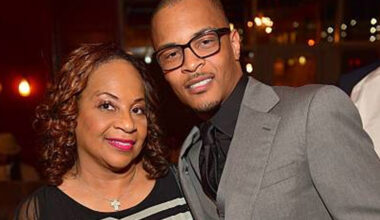
Deborah Chesky’s name often appears adjacent to a better-known one: Brian Chesky, born 1981, co-founder and CEO of Airbnb. That adjacency, however, risks flattening a fuller portrait. In public records and institutional profiles she emerges as both a parent and as a professional with decades of work in social services and nonprofit advancement. Her marriage to Robert (Bob) Chesky and her role as a mother to Brian and Allison are frequent touchpoints in society pages and event photography; they are the visible threads in a family tapestry whose center is not celebrity but steady civic engagement.
The family’s narrative is compact but resonant: parents who worked in social services, children who grew up in a household where civic-minded work was the norm, and a matriarch who translated early-career clinical social work into leadership in fundraising and philanthropic strategy. Photos from galas and institutional events show Deborah moving in donor and philanthropic circles — sometimes in the foreground, often as the quiet engine behind campaigns.
Career and impact: from social work to strategic philanthropy
There is a clear arc in Deborah Chesky’s public résumé. It begins in clinical and hospital social work — roles described in institutional biographies as director-level positions in hospital settings — then bends toward institutional advancement and fundraising. Over the years she held advancement posts at institutions including Rensselaer Polytechnic Institute and The College of Saint Rose. That pathway culminated in her leadership of That Man May See, the ophthalmology-affiliated foundation that later rebranded as All May See Foundation; she is listed publicly as its president.
Her CFRE credential, awarded and publicly announced in March 2022, is a signal: a professional who not only practiced fundraising but committed to the standards and certification that mark senior practitioners in the field. Fundraising, after all, trades in relationships, strategy, and sustained stewardship. Deborah’s career shows those three currencies in circulation — stewardship of institutional donors, strategic convening in vision-research funding partnerships (named appearances in 2024), and representation of a foundation at public-facing events.
Numbers matter here less as a ledger than as a timeline of institutional trust. A CFRE earned in 2022. Attendance at a vision research funding partnership convening in April 2024. Event photographs spanning at least 2016–2023. Each date is a flashpoint that, combined, maps a professional life that is active and ongoing.
Timeline of public milestones
| Year / Date | Public touchpoint |
|---|---|
| 1981 | Brian Chesky (son) — year of birth used as family anchor |
| ~2019–2020 | Leadership transition to That Man May See / All May See Foundation (publicized timeframe) |
| March 21, 2022 | CFRE (Certified Fund-Raising Executive) designation publicly noted |
| April, 2024 | Participation/representation at Vision Research Funding Partnership convening |
| 2016–2023 | Multiple public event appearances captured in photo galleries |
The timeline reads like a steady climb: early-career social work, followed by institutional advancement posts, followed by foundation leadership and external professional certification. The arc is pragmatic rather than theatrical.
Public presence, visibility, and privacy
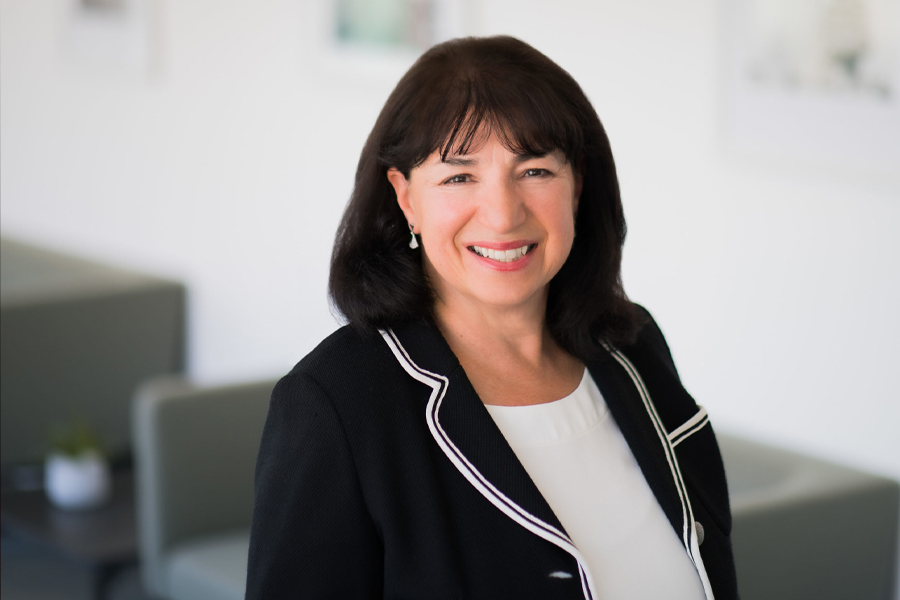
Deborah Chesky’s public footprint is professional and circumscribed. She maintains a LinkedIn résumé that outlines roles and responsibilities. She appears in event galleries and in organizational staff listings. She shows up where philanthropic work happens: at galas, on foundation pages, in sector convenings.
Yet there are deliberate boundaries. Unlike some family members who are the subject of widespread financial reporting, Deborah’s personal finances — net worth, private assets, detailed personal history — are not public. That absence is meaningful. It separates public service from the celebrity ledger that follows major corporate founders. It also preserves a measure of private life: exact birthdate, detailed schooling beyond career education on LinkedIn, and private relationships beyond a publicly referenced spouse are not in the public domain.
This balance — visible professional leadership paired with private personal life — is common among nonprofit executives who deliberately keep family matters and private finances out of journalism’s spotlight. The result is a biography that reads in two registers: clearly documented institutional work, and intentionally private personal life.
The professional portrait: skills, roles, and reputation
The elements that recur in public mentions are practical: fundraising strategy, donor stewardship, foundation leadership, event representation, and sector convening. The CFRE credential formalizes many of those skills. In philanthropic ecosystems, CFREs are frequently the ones designing long-range campaigns, building major gifts pipelines, and translating clinical needs (in Deborah’s case, ophthalmology and vision research) into philanthropic priorities.
Her early work in social services also frames her professional sensibility. Social work is, at core, service-oriented and systems-aware. Moving from that world into institutional advancement is a lateral translation: direct client advocacy becomes institutional advocacy; one-on-one casework becomes relationship management at scale.
Public appearances and institutional affiliations
Event photography and institutional news items show a pattern of active participation. The All May See Foundation — the organizational vehicle through which she serves — lists her in leadership roles and public-facing communications. She represents the foundation at convenings focused on funding vision research, connecting donors and researchers, and stewarding philanthropic priorities for ophthalmology.
These public appearances are not headlines so much as proof points. They tell a story of steady engagement: attending, convening, and managing the quiet mechanics of philanthropic work. In an ecosystem often described as networked and relational, Deborah operates where relationships convert into research grants, educational programs, and donor-funded initiatives.
What the public record does not provide
Despite public touches, there are clear limits. No authoritative source discloses Deborah’s personal net worth. No comprehensive, single-source biography focused on her alone has circulated widely. Video interviews or documentary features with her as the central subject appear absent from public platforms. Those gaps are not anomalies; they are choices — either hers or the media’s — to keep the spotlight focused elsewhere.
Her record, when read straight, is practical and unflashy: hospital social work; advancement roles at higher education institutions; leadership of a medically focused foundation; a professional certification attained in 2022; ongoing participation in philanthropic convenings into 2024. Like the fulcrum of a seesaw, her career balances public-facing philanthropy with private family life. The balance is not ostentatious. It is purposeful.