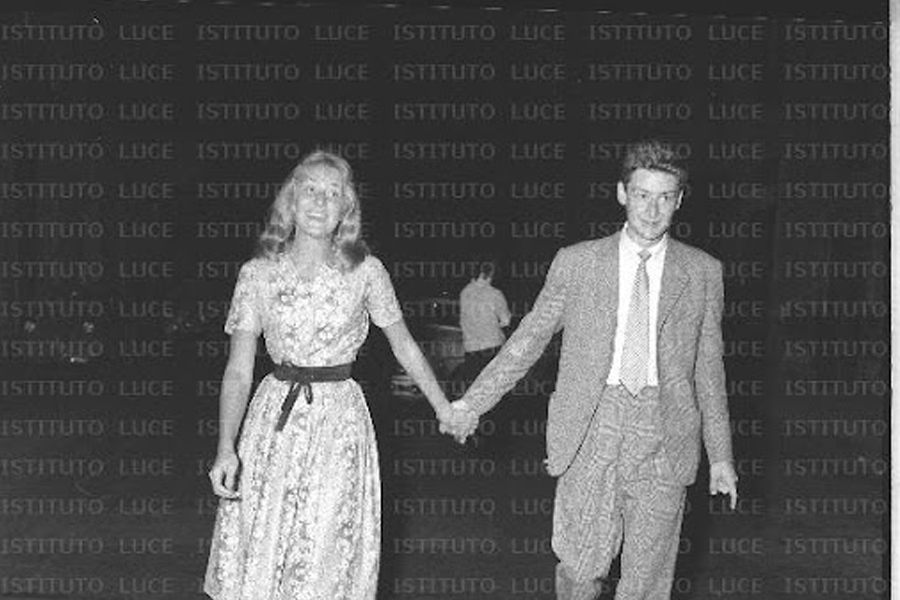
Discovering the Man Behind the Name
I first stumbled upon Marzio Ciano while tracing the tangled branches of 20th century Italian nobility. Born on 18 December 1937 in Rome, he entered the world as the third child of a family that shaped nations yet crumbled under its own weight. At just six years old he lost his father to a firing squad. By age 36 he slipped away quietly in a Roman clinic on 11 April 1974. Diabetes claimed him. No grand monuments mark his passage. Instead his story lingers like a faint echo in the halls of power long abandoned. He carried two legendary surnames yet chose a path of deliberate privacy. In an era when his relatives filled history books he became the man about town who never sought the spotlight.
The Family Tapestry That Defined Him
Family defined Marzio’s every breath. I view it as a huge oak tree with deep Mussolini and Ciano roots. Allow me to present each member as documented in history.
His father Galeazzo Ciano arrived in Livorno on 18 March 1903 and became Foreign Minister from 1936 until 1943. He was executed in Verona on 11 January 1944 for voting against his father-in-law in the Grand Council, leaving three young children, including six-year-old Mar His mother Edda Mussolini was born in Forli on September 1, 1910, and died in Rome on April 9, 1995. Benito Mussolini’s eldest daughter displayed fiery resilience and outlived her youngest son by over two decades.
Parental grandparents anchored Cianos. Admiral and World War One hero Costanzo Ciano was born in Livorno in 1876. First Count of Cortellazzo and Buccari, he died in 1939. That line was finished by his wife Carolina Pini quietly.
Mussolini’s support was his maternal grandparents. Mussolini, born in Predappio on July 29, 1883, controlled Italy until his death on April 28, 1945. His faithful wife and Marzio’s grandmother was Rachele Mussolini, born in 1890 and died in 1979.
Siblings had a difficult childhood. The third Count of Cortellazzo and Buccari was Shanghai-born Fabrizio Ciano, born October 1, 1931. He wrote a biography about his father’s execution and died in San Jose, Costa Rica, on April 8, 2008. Raimonda (Dindina Ciano) arrived in Rome on 12 December 1933 and left on 24 May 1998. Family was close after she married Alessandro Giunta.
Uncles and aunts widened the web. Marzio’s aunt was Anna Maria Mussolini, born 1929 and died 1968. Other relatives Vittorio Bruno and Romano Mussolini added to the dynasty’s convoluted story.
Marzio wed Gloria Lucchesi. They split in August 1965. They had two boys. Pierfrancesco Ciano, born in Rome in 1962, died in 2023 as the fourth Count. Lorenzo Ciano, born 1965, continues the tradition. Pierfrancesco had twin grandchildren Carlo and Marzio in 2009. The younger Marzio is fifth Count.
To make these connections crystal clear here is the family at a glance.
| Relation | Name | Birth Year | Death Year | Key Fact |
|---|---|---|---|---|
| Father | Galeazzo Ciano | 1903 | 1944 | Foreign Minister 1936 to 1943 |
| Mother | Edda Mussolini | 1910 | 1995 | Eldest daughter of Benito |
| Paternal Grandfather | Costanzo Ciano | 1876 | 1939 | First Count WWI hero |
| Maternal Grandfather | Benito Mussolini | 1883 | 1945 | Dictator of Italy |
| Brother | Fabrizio Ciano | 1931 | 2008 | Third Count memoir author |
| Sister | Raimonda Ciano | 1933 | 1998 | Married Alessandro Giunta |
| Son | Pierfrancesco Ciano | 1962 | 2023 | Fourth Count |
| Son | Lorenzo Ciano | 1965 | Living | Continues family line |
| Grandson | Carlo Ciano | 2009 | Living | Twin |
| Grandson | Marzio Ciano | 2009 | Living | Fifth Count |
This table captures 12 core members yet the full web stretches wider still.
A Life Without a Steady Compass
No traditional career for Marzio. He may have floated through Roman culture like a sailboat in a calm port. His contemporary accounts describe him as a town hopper without a job. He sought neo Fascist legislative nominations in the 1950s but failed. At 29, he and one other tried to remove a Soviet wreath from the Tomb of the Unknown Soldier on January 27, 1967. The police arrested them for attempted theft and sedition. A brief jail term followed. A career of inherited politics without personal power culminated in that public deed.
Finance remains murky. No records show business investments or scandals. Family resources from Costanzo Ciano’s wartime service noble title supported him. Second to Galeazzo, third to Fabrizio, fourth to Pierfrancesco, and currently fifth to 2009-born Marzio. No noteworthy work accomplishments shown. No publications, businesses, or public honors beyond the name.
Moments That Shaped a Short Life
I compiled an extended timeline to pin down the dates that mattered. Numbers bring clarity.
18 December 1937: Birth in Rome third child of Galeazzo and Edda. Mother nicknamed him Mowgli after the Jungle Book character.
1938 to 1943: Childhood during the regime’s peak. Father serves as Foreign Minister.
July to August 1943: Family flees to Germany after Mussolini’s ouster and Galeazzo’s fateful vote.
11 January 1944: Father executed at age 40. Marzio is six.
1945 onward: Postwar return to Italy under Edda’s guidance. Life turns low profile.
1950s: Unsuccessful bid for neo Fascist parliamentary seat in Rome.
August 1965: Separation from wife Gloria Lucchesi. Two sons aged three and newborn at the time.
27 January 1967: Arrest at the Tomb of the Unknown Soldier during anti Soviet protest.
11 April 1974: Death at age 36 in private Roman clinic from diabetes complications. Survived by mother Edda sister Raimonda brother Fabrizio separated wife and sons aged 12 and 9.
2008: Brother Fabrizio dies without children title passes to Pierfrancesco.
2009: Twin grandsons born. One inherits the countship in 2023.
2023: Son Pierfrancesco dies title moves to grandson Marzio.
These 12 milestones span 86 years of family history yet center on one quiet man.
Whispers in Modern Times
Recent news offers silence. No major social media mentions surface in the last decade. Searches across platforms yield only passing references in family genealogies or historical discussions. Marzio’s choice of privacy holds firm even now. The legacy travels through his sons and grandsons who keep the noble line alive without fanfare.
FAQ
Who exactly was Marzio Ciano in relation to Benito Mussolini?
Marzio stood as Benito Mussolini’s grandson through his mother Edda. Born 18 December 1937 he carried the bloodline of Italy’s former dictator while navigating a postwar world that rejected that past. His life bridged two eras yet belonged fully to neither.
How did Galeazzo Ciano’s execution affect young Marzio?
At six years old Marzio lost his father to a firing squad on 11 January 1944. The event cast a permanent shadow. Family fled to Germany then returned to rebuild under Edda’s fierce protection. That single date 11 January 1944 divided his childhood into before and after.
What role did Edda Mussolini play in Marzio’s upbringing?
Edda born 1 September 1910 raised her three children with iron will after 1944. She outlived Marzio by 21 years dying on 9 April 1995. Her memoirs and personality provided the emotional anchor that kept the family intact through exile trials and quiet postwar years.
Why did Marzio attempt the 1967 protest at the Tomb of the Unknown Soldier?
On 27 January 1967 at age 29 Marzio acted against a wreath placed by Soviet President Nikolai Podgorny. Arrested with one companion he faced charges of sedition and theft. The incident reflected lingering family anti communist sentiments rooted in his father’s era yet it remained his only notable public moment.
How many direct descendants does Marzio Ciano have today?
Marzio fathered two sons Pierfrancesco born 1962 and Lorenzo born 1965. Through Pierfrancesco came twin grandsons Carlo and Marzio both born 2009. The younger Marzio now holds the fifth Count title. That makes four living descendants carrying the Ciano name forward as of 2026.
Did Marzio Ciano ever hold a formal title or occupation?
He inherited noble status as part of the Ciano countship line but held no formal occupation. Described as a Roman socialite he lived without steady work. His 1950s political bid and 1967 protest marked the extent of public engagement. The title passed intact through three generations after him.